This page contains affiliate links. This means that we receive a small commission if you book something with our partner, without you paying anything extra.
Why Bulgaria is ideal for exploring by car
Firstly, Bulgaria is simply a stunningly beautiful country to explore. But if you do so by car, the experience is often even more enjoyable. Bulgaria boasts an incredibly diverse landscape: from mountains and hills to the Danube Plain and the Black Sea coast.
Many attractions are off the beaten track
Many attractions are located outside the major cities. For example, the Buzludzha Monument is literally situated in the mountains. This makes it difficult to reach by bike or on foot, for instance. Cycle paths are almost non-existent in Bulgaria, and public transport is often not reliable enough.
There are trains and buses (such as the Rhodope narrow-gauge railway), but these are often outdated and the timetables aren’t always convenient.

More freedom during your trip
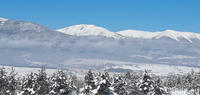
But with the beautiful mountain roads and panoramic routes that Bulgaria has to offer, isn’t it secretly much more fun to take the car? That way, you have the freedom to visit remote villages and nature reserves, such as the Pirin Mountains, which are rather difficult to reach by public transport.
Less traffic than in Western Europe
Fortunately, driving in Bulgaria isn’t difficult. One advantage is that there’s relatively little traffic outside Sofia. You do need to be careful on secondary roads, though, as these can be in poor condition.
What’s more, fuel is cheaper compared to Western European countries.
In this blog, we explain everything you need to know about driving in Bulgaria.
Don’t have your own car? We usually hire a car ourselves through Top Rent A Car at Sofia Airport because of their competitive prices, unlimited mileage and good service.
Driving to Bulgaria
It’s obviously not easy to travel to Bulgaria in your own car from the UK. If you’d still like to do so, here’s some important information.
The distance to Sofia is approximately 2,500 kilometres, depending on your starting point and route. Most travellers take two to three days for this journey, but it’s also possible to do it in one go if you drive through the night (not recommended).
You can easily book overnight stays along the way via websites such as Booking.com. When we drove to Bulgaria ourselves, we travelled via the Czech Republic, Slovakia, Hungary and Romania. We stayed overnight in the Czech Republic at Penzion U Rudolfů and in Romania at Pensiunea Day & Deny.
Always check before setting off that your car insurance is valid in all the countries you’ll be travelling through. You should also take your vehicle registration certificate, driving licence and ID with you.
There are other documents and items you’ll need to carry with you as well. You can read more about these later in this blog.
There are two popular routes:
Via Serbia
This is usually the quickest route. You drive through Germany, Austria, Slovenia, Croatia and Serbia to Bulgaria. Bear in mind that Serbia is not a member of the European Union. There may be queues at border controls, especially during the summer months.
Unfortunately, we experienced this ourselves in August 2022. We even had to wait 4.5 hours in a single day! 2.5 hours to enter Serbia via Bulgaria and 2 hours to leave Serbia and enter Hungary. It was absolute chaos and certainly no fun in the summer heat.
The roads on this route are, however, perfect. It’s all motorway, so it’s very manageable in all conditions.
Via Romania
This route is slightly longer, but you stay within the European Union and the Schengen Area. So there are no more border checks.
Many travellers choose this route if they also want to visit cities such as Bucharest along the way.
The roads on this route through Romania and Bulgaria are not as good. There are almost no motorways in either country (on this route), so you’ll have to deal with junctions, traffic lights, villages and so on. That does have its charms, of course, but if you want to put your foot down, Serbia is a better option.
Toll roads and the Bulgarian vignette
In Bulgaria, there is no road tax and there are no toll roads. Instead, everyone (both residents and tourists) needs an e-vignette. You do not pay at each toll gate, but via an electronic vignette.
When do you need a vignette?
Compulsory on virtually all motorways and main roads. The vignette applies to passenger cars, campervans and motorbikes.
If you drive on a main road without a valid vignette, you risk a hefty fine. Thanks to the electronic monitoring system, number plates are automatically checked by cameras along the road.
You should therefore always check carefully that your registration number has been entered correctly when purchasing the vignette. An incorrectly entered registration number is considered an invalid vignette.
The fine for driving without a valid vignette is €155 (2026).
How much does a vignette cost and where can you buy one?
- Online (via the official BGTOLL or Vinetki websites)
- etrol stations
- Border crossings
- Official sales points
Type of vignette | Price (2026) |
Daily vignette | €4.09 |
Weekend vignette | €5.11 |
Week vignette | €7.67 |
Monthly vignette | €15.34 |
Quarterly vignette | €27.61 |
Annual vignette | €49.60 |
Prices change regularly. You should therefore always check the current prices on the official BGTOLL or Vinetki website before you set off on your journey.
The weekend vignette and weekly vignette are particularly popular with tourists. For most holidaymakers, a weekly or monthly vignette is sufficient.
Traffic rules in Bulgaria
Are you planning to drive in Bulgaria? If so, it is important to be familiar with the local traffic rules. Although many rules are similar to those in the UK, there are also some important differences you need to bear in mind. For example, in Bulgaria you are required to drive with dipped headlights or daytime running lights during daylight hours all year round.
Other rules also differ. Here we explain some of the key rules.
Speed limits
Road type | Speed limit |
Built-up areas | 50 km/h |
Outside built-up areas | 90 km/h |
Speed road (green sign) | 120 km/h |
Motorway (green motorway sign) | 140 km/h |
Winter tyres and driving in winter: are winter tyres compulsory?
Between 15 November and 1 March, winter requirements apply to vehicles. What exactly are the rules?
Winter tyres or sufficient tread depth are compulsory: a minimum tread depth of 4 mm during the winter period.
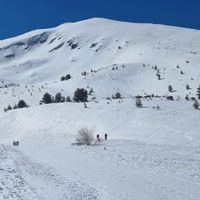
When driving in the mountains, take extra care in the following regions:
- Bansko
- Borovets
- Pamporovo
- The Shipka Pass
If you’re driving to Bansko, you must carry snow chains in your car. This also applies in other mountainous areas.
Although this is not checked, it is advisable to carry a set of chains with you. They may well come in handy if, unexpectedly, there is a lot of snow on the road.
Police checks in Bulgaria
Police checks are a regular occurrence, particularly in border areas and on some main roads. You’ll also come across police more frequently around tourist destinations.
For example, I personally had to stop once at night for a breathalyser test and once because my car insurance had expired.
What if you get a traffic fine?
If, against all odds, you do receive a fine, it needn’t be a disaster at all. Simple fines, such as a ticket for illegal parking, will cost you no more than a few tens.
What’s more, these fines are fairly straightforward to pay. You can do so, for example, at the local police station, or online via the official website of the Bulgarian Ministry of the Interior.
Parking in Bulgaria
Parking in Bulgaria is usually straightforward and inexpensive. In smaller towns and villages, you can often park for free, as you can in the larger cities outside the city centre.
In larger cities such as Sofia, Plovdiv, Varna and Burgas, many areas have paid parking zones. These are often designated as blue or green zones.
The green zone is usually located just outside the city centre. In Sofia, parking in this zone cost €1 per hour in 2026.
The blue zone covers the busy city centre. In Sofia, parking here cost €2 per hour in 2026.
Payment can usually be made via:
- SMS (only with a Bulgarian mobile number)
- Parking meters
- Mobile apps (URBO City or Sofia Parking in Sofia)
You’ll also find underground car parks in major cities. These are often secure and are priced similarly to the zones, though sometimes slightly more expensive.
Always check the parking signs carefully. Incorrectly parked cars may be towed away or have a wheel clamp fitted.
In Bansko, most parking spaces are now paid for. During the winter months, it can get busy around the gondola lift.
Documents required for driving in Bulgaria
- Driving licence
- Passport or identity card
- Vehicle registration certificate
- Insurance documents
A fire extinguisher is compulsory in cars in Bulgaria, as are high-visibility vests, a first-aid kit and a warning triangle.
Other rules
Alcohol
Limit: 0.5 per mille. Stricter rules apply to novice drivers.
Seatbelts
Compulsory for all passengers. Children must be transported in a suitable child seat.
Hands-free calling
Using a mobile phone whilst driving is only permitted with a hands-free system.
What should you watch out for?
In Bulgaria, you should be particularly careful of potholes or stones on the road surface. Main roads are usually well maintained, but local roads or city streets may have huge potholes. Street lighting is also sometimes lacking.
If you’re travelling to the Bansko region, you don’t need to worry about this; the roads there are excellent.
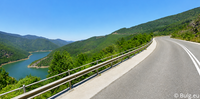
Some roads may have hazardous features, such as missing crash barriers, missing reflective posts and blind junctions.
Another point to bear in mind is the Roma’s horse-drawn carts. They travel slowly and can cause dangerous situations.
Most Bulgarians are good drivers, but the traffic can sometimes be a bit more aggressive than you might be used to in the UK.
Particularly on country roads, it’s common for drivers to overtake in places where you wouldn’t immediately expect them to. So keep a safe distance and stay alert, especially in mountainous areas.
Don’t let this put you off: millions of tourists drive through Bulgaria every year without any problems.
Filling up in Bulgaria
Filling up is a lot cheaper in Bulgaria than in the UK and works in the same way. At most (large) petrol stations, there is a member of staff who will fill your tank for you.
Well-known petrol stations
- Lukoil
- Shell
- OMV
- EKO
- Rompetrol
Hiring a car in Bulgaria
Why hiring a car is a good idea

Although Bulgaria has a network of buses and trains (including one of the most beautiful train journeys in Europe), a hire car is by far the best way to explore the country. This is because many of the most beautiful places are located outside the major cities and are difficult or time-consuming to reach by public transport.
Think, for example, of the Rila Monastery, the Seven Rila Lakes, the Pirin Mountains, the mysterious Buzludzha Monument, the Rhodope Mountains and countless authentic villages that are barely served by public transport.
With a hire car, you’ll enjoy maximum freedom. You decide your own route, pace and stop-offs, without having to rely on timetables, delays or taxi drivers. What’s more, the distances in Bulgaria are relatively short, making it easy to explore several regions during a single holiday.
Another advantage is that many car hire companies also allow you to cross the border into neighbouring countries such as Greece or Romania. For example, you can effortlessly combine a holiday in Bansko with a day at the beach in Thessaloniki or Kavala.
In short: if you want to make the most of your trip and truly discover Bulgaria, a hire car is virtually indispensable.
Where can you hire a car?
You can hire a car almost anywhere in Bulgaria, but most travellers choose to collect their hire car directly at the airport. This is often the cheapest and most practical option.
The main locations are:
- Sofia Airport
- Plovdiv Airport
- Burgas Airport
- Varna Airport
For visitors to Bansko, Sofia Airport is the best choice. From here, it takes about two hours’ drive to reach Bulgaria’s most famous mountain resort.
Our experience with Top Rent A Car
We recommend Top Rent A Car for car hire. We’ve hired a car from them several times ourselves and our experiences have always been positive.
On one of our trips, we were even offered a larger car at no extra cost. We were travelling as a group of four, and the member of staff felt that the car we’d chosen was actually a bit too small. As we’re all quite tall, he suggested providing us with a more spacious model free of charge. You don’t see that sort of service everywhere.
What’s more, the cars are modern, well-maintained and clean. Matters such as insurance, breakdown cover and the administrative paperwork are clearly sorted out, so you can hit the road without any worries.
Another major advantage is that you have unlimited mileage and can often get permission to cross the border into, for example, Greece. That makes hiring a car particularly attractive if you want to visit several countries during the same trip.
You can easily check availability and current prices online and book straight away for your trip to Bulgaria.
We work with reliable partners such as Top Rent A Car. If you book via our link, we receive a small commission at no extra cost to you.
Beautiful driving routes in Bulgaria
Route 1: Sofia – Rila Monastery – Bansko
210 km – 3 hours and 15 minutes
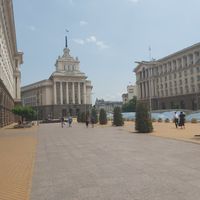
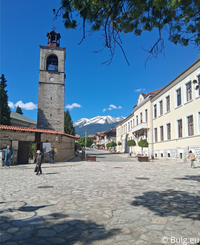
Enjoy stunning views from the motorway of the Vitosha, Rila and Pirin mountains. You’ll drive through ancient villages, unspoilt countryside and past the breathtaking Rila Monastery. You’ll then drive over a beautiful mountain pass to Bansko, where you’ll find yourself in a true mountain region.
Route 2: Bansko – Melnik – Rozhen Monastery
110 km – 2 hours
You’ll drive over the beautiful Predela Pass to the Kresna Gorge. In this breathtaking stretch of natural beauty, you’ll drive through a narrow gorge teeming with incredible flora and fauna. In Melnik and Rozhen, you can enjoy the wine, the sandstone pyramids and the Rozhen Monastery.
Route 3: Sofia – Svoge – Vratsa
113 km - 2.5 hours
Drive through the stunning Iskar Gorge, where you can enjoy views of the mountains, the Iskar River, villages and small towns. A beautiful and unique route through the incredibly beautiful countryside of the Balkan Mountains.
Route 4: Pazardzhik – Smolyan
126 km - 2.5 hours
A particularly beautiful driving route through the Rhodope Mountains. Along the way, you’ll enjoy the magical natural scenery of the Rhodopes, the ancient village of Shiroka Laka and mountain meadows.
Route 5: Shipka Pass and the Valley of Roses (Gabrovo – Kazanlak – Sofia)
245 km – 4 hours
One of Bulgaria’s most beautiful driving routes. Along the Shipka Pass, you’ll find monuments such as Buzludha and Shipka, as well as stunning natural scenery. In the Valley of Roses, from May to June, you’ll drive through a pink valley filled with roses. A long but very scenic route through the Bulgarian mountains.
Route 6: Black Sea coast from Varna to Nessebar
100 km – 2 hours
A beautiful route along the coast through the woods. Enjoy the views of the Black Sea and the authentic villages.
Is it safe to drive in Bulgaria?
Many people wonder whether it is safe to drive in Bulgaria. The short answer is: yes.
The main motorways and major roads have improved significantly in recent years and are constantly being expanded. The infrastructure is now of a good standard, particularly around Sofia, Plovdiv, Burgas and Bansko.
The biggest risks usually aren’t other road users, but unexpected situations such as potholes, stray animals or poorly lit roads outside built-up areas.
With a normal driving style, sufficient attention and good preparation, driving in Bulgaria is no more dangerous than in many other European countries. It’s a wonderful experience you’ll never forget!
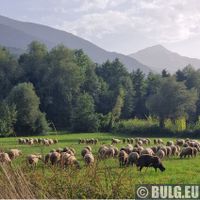
We have been living in the Bansko region since 2023 and drive through Bulgaria almost every day. The information in this article is based on our own experiences and is updated regularly.
Are you planning to explore Bulgaria by car?
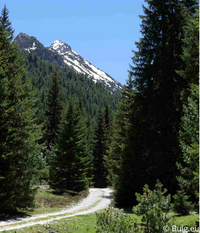
Driving in Bulgaria is actually the best way to discover the country. With a valid vignette, knowledge of the traffic rules and good preparation, you can enjoy impressive mountain roads, authentic villages and beautiful natural areas without any problems.
Whether you’re hiring a car or travelling in your own vehicle, Bulgaria is perfect for exploring by car.
Frequently asked questions about driving in Bulgaria
Do I need an International Driving Permit?
No, you don’t need an international driving licence.
Are the roads in Bulgaria in good condition?
The main roads are generally in good condition. Local and urban roads can be in poor condition.
Can I drive a hire car to Greece?
Yes, often you can, provided you specify this well in advance when booking, due to insurance requirements.
How does the vignette work?
You can buy the vignette online or at official outlets, and it’s valid for a specific period.
Are there many speed cameras?
There aren’t many speed cameras, but you’ll regularly see cameras checking number plates for expired insurance, vignettes and roadworthiness certificates.