Why Bulgaria?
More and more Brits are trading their busy lives in Western Europe for a new existence in Bulgaria. Not only retirees, but also young families, entrepreneurs, and digital nomads are discovering the benefits of this versatile country.
Lower housing costs, impressive nature, more peace and quiet, and a sunnier climate make Bulgaria more attractive than ever. But what is it really like to live here?
We moved to the Bansko region ourselves from the Netherlands in 2023. In this article, we share our experiences and explain why more and more people are taking the same step.
1. The cost of living is significantly lower
Living without sky-high costs

Houses in Bulgaria are much cheaper than in the UK. In the countryside, you can buy a house with a large plot of land for less than £100,000. Of course, this does not apply in the cities, but even there, it can still be affordable.
Lower rental prices are also a major advantage. Although you often pay top dollar, mainly in Sofia, rental properties in smaller towns or villages are much more affordable.
Additionally, taxes are much lower. Thanks to the 10% flat tax and relatively low charges, many employees and entrepreneurs have more net income than in many Western European countries.
Cheaper grocery shopping
You will find many local products at the weekly market, often from the seller's own garden. Most Bulgarians grow much of their own food.
These weekly markets are often cheaper than the supermarket.
However, groceries in the supermarket cost about the same as in the UK. Quite remarkable in a country where salaries are much lower. But with smart shopping, it doesn't have to be excessively expensive at all.
Eating in a restaurant used to be very cheap for tourists, but in recent years (especially after the introduction of the Euro in 2026), prices here have risen as well. Nevertheless, compared to the UK, you still pay significantly less for a meal in an atmospheric restaurant.
Especially outside the tourist areas or major cities, you can still eat out very affordably.
Due to the beautiful weather, there is no shortage of outdoor cafes. A cup of coffee or a beer is often cheap, but if you go to get an ice cream or a pastry, the prices might come as quite a shock. These are luxury products that simply cost a bit more.
Our personal experience
Our experience is that life in Bulgaria *can* be cheap, but it is by no means always the case. While many things are really much cheaper than in the UK (such as taxes, alcohol, tobacco, and driving licenses), there are also many things that we find quite unusual.
For instance, an hour of bowling is quite expensive and there are no discounts or packages, so you always pay the full price.
2. More peace, space, and freedom
Less traffic
The roads are quiet in Bulgaria. There are far fewer traffic jams, you are allowed to drive fast on the motorway (140 km/h), and driving is simply incredibly relaxed without the heavy traffic you are used to in Western Europe.
A life closer to nature
Bulgaria has a much lower population density and, as a result, much more beautiful nature. You don't even have to leave the highway to see beautiful vistas and stunning nature!
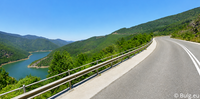
The country actually has everything to offer: mountains, vast forests, lakes, beaches, and beautiful plains such as the Rose Valley. Bulgaria is therefore known for its beautiful, vast nature. And animals such as brown bears and wolves even live there.
Although Bulgaria has only three national parks (Rila, Pirin, and Central Balkan), these are much larger than all 22 national parks in the Netherlands combined! And that is not all, because there are also dozens of protected nature reserves.
The total land area of all protected nature reserves in Bulgaria amounts to approximately 45,465 km², larger than the entire Netherlands! This means that no less than 41% of Bulgarian territory consists of nature with protected status. This makes Bulgaria one of the absolute leaders within the European Union in the field of nature conservation.
It is therefore not surprising that Bulgaria appeals to a huge number of nature lovers.

Partly due to the proximity of nature (even in the capital Sofia with the Vitosha nature reserve), daily life in Bulgaria is much slower. Many people experience daily life here as less rushed, which can contribute to more peace, relaxation, and connection with each other and with nature.
If you have a busy life and a need for simplicity, Bulgaria is the perfect destination to unwind and enjoy the little things in life more.
Take it from us: every day is a joy with so much nature around you. Since we have been living in Dobrinishte, we notice every day how much peace the surroundings provide. Within a five-minute walk, we are right in the middle of nature.
3. The climate is a major advantage
Four real seasons
Warm summers are absolutely normal in Bulgaria. In cities like Plovdiv and Sandanski, temperatures of 40°C are certainly not uncommon.
In the rest of the country, summer temperatures often hover around 30°C, which is certainly not unpleasant with a sea breeze on the coast or the cooling effect of the nearby mountains.
Additionally, it cools down sufficiently at night to allow for comfortable sleep.
In winter, on the other hand, it can get quite cold. We live in the mountain region of Bansko, and night temperatures of -20°C are not exceptional here. It freezes almost every night, and more than a meter of snow can fall just like that.
In total, there is a snow cover in the valley in our area for about a month, but this will be different in other parts of the country.

One advantage, however, is that the sun often makes an appearance. This makes everything a lot more pleasant and ensures beautiful photos. The winters here are a delight, especially if you love skiing!
Spring and autumn are completely different here. It can freeze, but it can also be over 20 degrees. In spring, you see flowers shooting out of the ground everywhere, turning the entire country into a beautiful spectacle of colors, such as in the Rose Valley.
Autumn is perhaps the most beautiful time for hiking. Pleasant temperatures, plenty of sunshine, nature preparing for winter, and mushrooms to be found everywhere.

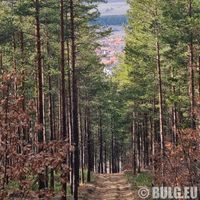
One of the sunniest countries in Europe
Bulgaria has significantly more hours of sunshine than the UK. Especially along the coast, where the sun shines for about 300 days a year.
Further inland—and particularly in the mountains—there is generally more cloud cover, but still more hours of sunshine than in England.
Differences by region
Black Sea
The Black Sea coast is known for its warm, dry climate all year round combined with a pleasant sea breeze. It is usually windier here, but due to the proximity of the sea, winter temperatures are much milder than in the west of the country.
Sofia
Sofia generally has warm, sunny summers (around 30°C) and cold winters, with a high chance of heavy snowfall. However, temperatures are unlikely to reach extremes due to its somewhat higher altitude and Mount Vitosha.
Bansko
In winter, there is a guaranteed layer of snow on the mountain peaks, with regular snowfall in the valley as well and temperatures that can drop significantly. In summer, it is generally pleasantly warm, but there are also days every year with 35°C or higher.
Southern Bulgaria
The Sandanski region is known as the warmest and sunniest region of Bulgaria.
In the higher southern mountain regions (Pirin, Rila, and Rhodopes), a typical high-mountain climate prevails. Here, winters are cold with heavy snowfall, while summers are cooler than in Plovdiv, for example. This also applies to the Balkan Mountains in the north.
4. Remote work makes emigrating easier
The rise of remote work
Whereas in the past you were tied to an office, nowadays more and more people can perform their work entirely online. Thanks to fast internet connections, video conferencing, and cloud software, it is no longer necessary for many professions to be present at a fixed location daily.
This development has ensured that more and more people no longer let their place of residence be determined by their work, but by the lifestyle they pursue. Instead of living in a busy and expensive city, many choose to settle in a place where costs are lower, nature is close by, and the quality of life is higher.
Remote work has taken off enormously, especially since the coronavirus pandemic. More and more employees, freelancers, and entrepreneurs are discovering that they can do their work just as well from an apartment in the mountains of Bulgaria as from an office in the UK.

Why Bulgaria is attractive to digital nomads
In recent years, Bulgaria has grown into a popular destination for digital nomads and remote workers. That is not without reason. Low cost of living
One of the biggest advantages is the price level. Rent, restaurants, and other daily expenses are lower than in the UK. As a result, many remote workers can improve their quality of life without their income changing.
Moreover, for freelancers and entrepreneurs, this means they have more financial leeway to save, invest, or work fewer hours.
Fast internet connections
Although many people still associate living in Bulgaria with living in a less developed Eastern European country, the digital infrastructure is surprisingly good. Fast fiber optic connections are available in most cities and tourist areas, and internet speeds are often comparable to or even better than those in Western Europe.
Coworking spaces and networks
In an increasing number of Bulgarian cities, you can find modern coworking spaces where freelancers, entrepreneurs, and remote workers come together. These locations offer not only a professional workspace but also the opportunity to make new contacts and collaborate with like-minded people from all over the world.
For people who do not want to work alone from home all day, these coworking spaces represent an ideal solution.
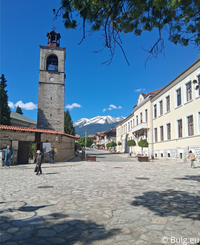
Bansko as a digital nomad hub
Within Bulgaria, one place has built a special reputation among remote workers: Bansko.
What was once primarily known as a winter sports destination has since grown into one of the most famous digital nomad hubs in Europe.
International community
Hundreds of digital nomads, entrepreneurs, and remote workers from dozens of different countries now live in Bansko. This creates a unique mix of cultures, backgrounds, and expertise.
New residents often feel at home quickly thanks to the many activities, meet-ups, and informal gatherings organized throughout the year, such as the Bansko Nomad Fest.
One of the most famous events is the annual Bansko Nomad Fest. During this event, thousands of digital nomads, entrepreneurs, and online professionals from all over the world come to Bansko for lectures, workshops, sports activities, and networking events.
The festival has played a significant role in Bansko's international reputation as a remote work destination.
Coworking Bansko
Coworking Bansko forms the heart of the digital nomad community. This popular coworking space offers modern workspaces, meeting rooms, high-speed internet connections, and an extensive activity program.
Many newcomers make their first contacts here and build a social and professional network.
The combination of an active international community, excellent facilities, beautiful nature, and low costs makes Bansko one of the most attractive places in Europe for many digital nomads to live and work.
5. Bulgaria is surprisingly close
From London, Bulgaria (Sofia) is more than 2,440 kilometers away.
For most travelers and emigrants, the plane is the best option. You can fly to Sofia from several airports within 3 hours. As a result, family and friends remain easily accessible.
Moreover, emigrating feels less permanent than it used to. Bulgaria is in the EU, so travel between the UK and BG is quick and easy, many rules are the same, and obtaining a residence permit is not too complicated.
And if you don't like it after all, the step back to the UK is also a small one.
Emigrating to Bulgaria
Bulgaria is a member of the EU and the Schengen Area, which means free movement.
The only thing you need to keep in mind is that officials often do not speak English.
Buying a home
Finding a house in Bulgaria is more than a practical search; it is an adventure.
Naturally, you first need to know which region you want to live in, because every region differs greatly.
Do you want to live in the mountains? Then we recommend Bansko, where we live ourselves. But also consider the Smolyan region, Borovets, etc.
Do you want to live on the coast? Then consider places like Varna, Burgas, and Balchik.
Do you want to live in Sofia? In Plovdiv? Or further north along the Danube?
When buying a home, you will need to deal with the required documents:
- Valid passport or ID card
- Bulgarian tax identification number (EAN) – To be applied for via a notary
- Local bank account for payments

These are the costs you need to take into account:
- Notary fees and registration: ±3–5% of the purchase price
- Real estate agent commission: depending on the agency
- Annual taxes and maintenance
Residence registration
One of the first things you do when you arrive in Bulgaria is register as a resident of the country. This is mandatory if you stay in Bulgaria for longer than 90 days and is done at the immigration office in the province where you will be living. Bansko is located in the province of Blagoevgrad.
If you are going to live in Bansko, you will have to drive to the city of Blagoevgrad for all important documents, which is about a 50-minute drive from Bansko.
Do you want to know how this process works? On our Emigrating page, you can read everything about registering as a resident in Bulgaria.
Health Insurance
Taking out health insurance when you move to Bulgaria doesn't have to be difficult. In many cases, this is arranged through the employer, but there are also companies where this is not the case.
You can also, of course, start your own business, in which case this is not the case either. In that case, you really will have to arrange it yourself, because going to work uninsured is obviously not very sensible, although you won't be the only one. In Bulgaria, people insure themselves much less than in the UK.
Many people are not insured at all!
If you do get insured anyway (and that is highly recommended), you will be amazed by the low premiums. Health insurance won't cost much more than €200 per year.
All in all, emigrating to Bulgaria is relatively simple.
Are you seriously interested in emigrating to Bulgaria? Read our emigration guide.
Who is Bulgaria interesting for?
Bulgaria is not the ideal destination for everyone, but for certain groups, the country actually offers many advantages. Thanks to the low cost of living, beautiful nature, and relaxed lifestyle, more and more people are choosing to settle here temporarily or permanently.
Families
For families, Bulgaria offers a peaceful and safe living environment, with plenty of space to play outside and grow up in nature. Especially in smaller towns and mountain regions, life is less hectic than in Western Europe. Additionally, housing costs are significantly lower, often leaving more financial room for the family.
Retirees
Retirees are also increasingly finding their way to Bulgaria. The combination of a pleasant climate, lower daily costs, and a relaxed pace makes the country attractive for those who want to enjoy their retirement. Moreover, Bulgaria is only a 3-hour flight from the UK, making it easy for family and friends to visit.
Entrepreneurs and freelancers
For entrepreneurs and self-employed professionals, Bulgaria offers interesting opportunities. Low fixed costs and a favorable tax system make it attractive to start a business or run an enterprise from Bulgaria. This can be an interesting combination, especially for people who work online.
Digital nomads and remote workers
Thanks to fast internet connections, modern coworking spaces, and an active international community, Bulgaria has grown into a popular destination for digital nomads. Bansko, in particular, is internationally known as one of the best places in Europe to work remotely, while simultaneously enjoying the mountains, nature, and a lower cost of living.
People seeking more peace
Not everyone moves for work or financial benefits. Many people choose Bulgaria precisely because they crave more peace, space, and a simpler life. Whether you dream of a house with a large garden, hiking in the mountains, or a life closer to nature: in many parts of Bulgaria, this is still affordable and within reach.
Are there any downsides?
- The Bulgarian language: a difficult language that does not resemble English in any way. And then there is also a different alphabet. Nevertheless, you will eventually have to, because many people do not speak English.
- Bureaucracy: applying for documents and permits takes a terribly long time, in our experience. Bulgarians (especially civil servants) take their time with everything and do not rush anything. This can be extremely frustrating. Additionally, there is a lot of corruption.
- Healthcare outside cities: GPs can be found everywhere, but they are often not of the standard you are probably used to. They often work with inadequate resources in old buildings.
- Lower salaries: salaries in Bulgaria are significantly lower: an average of €1,407 gross in 2026.
Our choice for Bulgaria
In 2023, the six of us moved from North Holland to Bulgaria. Here, we first stayed in a hotel and a rental house in Razlog before buying a house in Dobrinishte, close to Bansko.
We have been living here happily since April 2024. We wouldn't even want to go back to the Netherlands!
Here you can read a brief explanation of why we live in Bulgaria.
Why Bansko?

We made the choice to leave the Netherlands for many reasons, but primarily to live in the mountains and in an environment with more sunshine.
As a child, I visited Austria every year for ski holidays and later for hiking holidays. It had always been a dream to live in the mountains.
After the COVID-19 period, the idea of emigrating slowly emerged. Because of everything that was happening in the Netherlands, we started looking for a country within Europe where life is even more the way it should be. After Sweden, Hungary, and Romania, we eventually ended up in Bulgaria.
In August 2022, we went on a road trip to Bulgaria with the idea of getting to know the culture and the country to see if it was suitable for us to live there.
We visited several mountain regions there, but eventually we ended up in Bansko, and we have never left!
What we like about Bansko is, of course, hiking in the mountains and the nature. In addition, we enjoy the many cultural events in the region, such as the jazz festival and the many traditions.
It is a very international area where many Brits also visit. There are many good restaurants, and the atmosphere of the old town of Bansko and the villages in the region is simply magical.
It is simply pure enjoyment every day!

How life is now
In December 2023, we bought a house in Dobrinishte, a small mountain town near Bansko. The house was in poor condition and needed a tremendous amount of work. Step by step, we are turning it into our dream home. Although it is still not completely finished (for example, the roof still needs to be replaced), it really feels like home by now.
The previous owners had barely done any maintenance for over twenty years. That is why we started from scratch. We had to lay new floors, pour concrete, insulate, and install central heating, simply because there wasn't any. In addition, we had to do a lot of demolition.
The strange thing is that the previous owners left everything behind, right down to furniture and personal belongings. We had to clear everything out. And I can tell you: that was a huge amount. Countless times we took a car full of junk to the dumpsters.
Now the house is livable and furnished to our taste. Still, you can still see things everywhere that aren't finished yet. But everything in due time is part of the process.
Our lives have also adapted to Bulgaria by now. I got my driver's license in Sofia and the children go to school here. We don't speak fluent Bulgarian yet, but we are learning the language step by step. The children are picking up more and more words at school now.

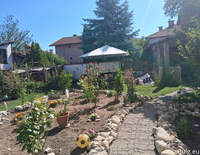
We enjoy the beautiful weather every day, go for long walks, and our garden is growing nicely. How it looked before was unbelievable. It was actually full of glass, waste, and other junk. There wasn't a single plant or blade of grass in it, except for weeds meters high. It was more of a garbage dump than a garden. From entire roller shutters to clothing, shoes, pieces of wood, and plastic sheeting. The entire garden was also littered with old, rusty nails, one of which we still find every now and then.
After months of cleaning up, pruning, and redesigning, that has completely changed.
The photo only shows a part of the garden, because we also have a large driveway, a section of garden on the side of the house, and some fruit trees on the right.
Now we have a green garden that we enjoy every day. We grow tomatoes, cucumbers, and even Dutch kale there, among other things. Additionally, there are various fruit bushes growing with raspberries, blackberries, and currants, and there are several fruit trees.
Few things compare to the feeling of coming home after a walk through the mountains and picking vegetables or fruit from your own garden. It is precisely those simple moments that make it clear to us that the decision to emigrate to Bulgaria was the right one.
Of course, emigrating is not always easy. But when we look out the window at the Pirin in the morning and eat vegetables from our own garden in the evening, we know exactly why we took this step.
Do you also want to emigrate to Bulgaria?
Emigrating to Bulgaria has many advantages:
- Lower cost of living
- More peace and space
- Plenty of sunshine
- Possibility to work remotely
- Simple emigration within the EU
However, not everyone will feel at home here. After all, it is a lot quieter than the UK, with a less developed infrastructure.
It is difficult to figure everything out on your own if you do not speak the language. Many people at government institutions also do not speak English, which presents many challenges.
That is why we hired a lawyer in Razlog who helped us with applying for our residence permits, transferring ownership of the car, and the rules in Bulgaria for buying a house, for example.
It is important to arrange everything with someone you trust. We are happy to put you in touch with the people who helped us. This saves a lot of stress and time, so that you can focus on your work, learning the language, or enjoying nature or activities.
But for people looking for more freedom, nature, and affordability, Bulgaria is a destination that is becoming increasingly difficult to ignore.
Do you need help with emigrating or would you like more information? Click the button for more information about emigrating to Bulgaria or contact us.